


AUTHOR: Star Sports Content
SIMON NOTT: Following the Track(er) to Extinction
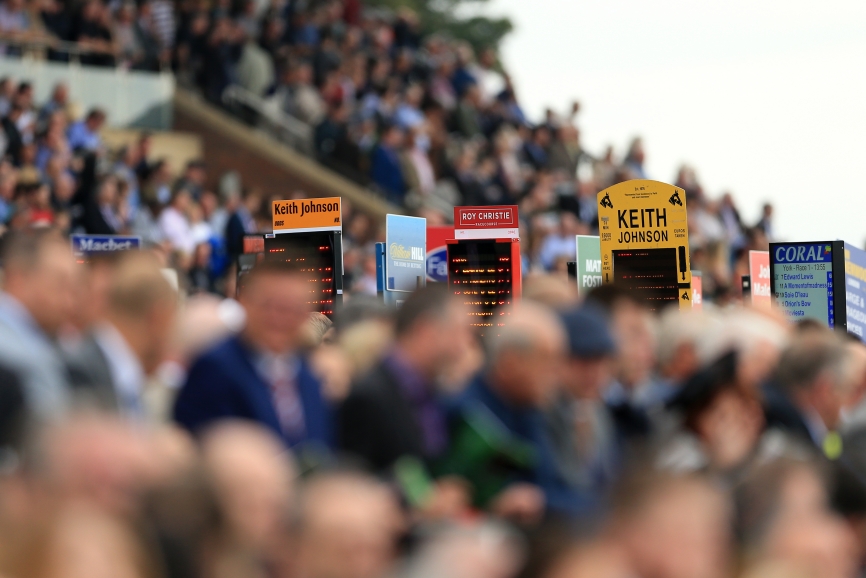
I recently received an email from a well-known professional punter, his identity shall remain anonymous but he was very high-profile on course back in the day. That is before following the route of many of his ilk and retiring to the comfort of his own home to mop up the plethora of less than clever money sloshing around the exchanges shortly after their inception. A few years ago, he decided to forsake staring at a screen and return to the racecourse to do battle with the old enemy.
Despite being a professional punter, his return to the racecourse is good news for bookmakers. The betting ring needs its characters if it is going to continue to flourish. His email wasn’t heart-warming reading. He was lamenting how things have changed since his hiatus. As with the way professional punters operate, the way on-course bookmakers do have too. The most obvious the electronic boards and computers, over the years the software they use has become much more high-tech. When my racecourse bookie boss, David Phillips, became one of the first to use computers to record bets and issue printed tickets on course back in the late 1990’s he, John Lovell and the rest were initially scoffed at. The old-school clerks all laughed at the primitive laptop and printer set-up, the latter balanced on a pile of stools or crates, the whole lot powered by car batteries. There were teething problems, rain caused havoc and the software was basic, but the punters loved it. Casual racegoers were often suspicious of the old card tickets, not confident that the bookmaker who know what bet was there. Within a few years everyone used computers and the clerks that scoffed either had to ditch their pencils and learn to type or retire.

The bad news for clerks was that while a good one using a pencil and field book was priceless on a busy day, pretty much anyone could be taught to tap in a bet on a computer. The bookmakers still needed the skill of making a book but that soon became a game almost anyone could play too. The days of working out percentages and prices in their heads were numbered as ‘how they were betting’ was there on the screen for all to see. The early use of computers on course pre-dated the exchanges but a couple of years but the on-course bookies soon caught onto them too. The technology wasn’t there to incorporate using them on the same laptop as they do now. To get over that the bookmaker would have a man on the phone on course to a man on the phone at home. The men on the phones would converse, the one at home giving the one on course the prices available. The bookmaker would then price up accordingly. This led to some hilarious scenes on-course. These would usually be the result of the chap at home daydreaming would startle back into life when the boss just laid a £1000 bet a 6/4 and asked him to have it back at the 2/1 he said had been there, only to see it had vanished. Of course, he’d never admit to daydreaming etc, you’d hear the on-course man on the phone relaying, ‘He says they are taking it, it’s going it’s going, missed it, gone best priced 5/4 now’.

Fast forward to 2019 and the bookmaker’s computerised systems of which there are a few choices are all singing all dancing. Their electronic books are linked directly to the exchanges while the guys earning from home daydreaming redundant along with clerks and floormen. The bookmaker now gets an alert when a horse’s price is getting near to that on the exchange making life easier. Progress waits for no man; the most recent innovation is a ‘tracker’ which, if wished, can change the prices for the bookmaker automatically. This means that the odds displayed on a bookmaker’s board haven’t been set by him at all, just whoever is collectively trading on the ‘machine’ at the time with a profit margin built in.
Back to the professional punter, his email to me was complaining that he’d had a bet with an on-course bookmaker at Cheltenham, it was 10/3 on the board when he asked for the bet but as he struck it, the price changed to 3/1, the price that appeared on his ticket and the bet would have been settled at. He complained, the bet was corrected by a girl on the joint who appeared to be oblivious to what prices were on the board. There wasn’t even an apology from the bookmaker in the most clinical of transactions. Some bookmakers might think a tracker is an excellent innovation and labour-saving boon, but I fear the worst. Anyone remember the bookmakers queuing up for a free umbrella advertising the exchange that was to ensure most of them no longer come any more? Chasing reps around the ring asking if they ‘wanted it again’ after laying an earner to them then having it back on the machine? The answer very soon was they not only didn’t want it again but not at all.
If layers all adopt this way of doing business surely there’s a danger on-course bookies will start to be seen as nothing more than on-course betting terminals, easily replaced by other on-course betting terminals with all profits going to the racecourse. The biggest off-course bookmaker is already giving its own ‘show’ prices not taking them from the traditional bookmakers on-course market. The threat of an industry SP is surely just over the horizon. If that comes to pass, the heart-breaking reality of a sunset of on-course betting rings as we know them could be a real reality with some regional racecourses sure to follow.
It’s pretty much agreed that the last few minutes of the market are the most telling and accurate when anticipating the outcome of a race so topping the machine would be financial folly. However, on-course bookmakers bet for around half an hour before each race. You wonder if there’s not a real opportunity for an enterprising on-course firm to buck the trend. You often hear bookmakers using the term ‘traders’ in a derogatory manner towards some punters, sneer as they do these guys can anticipate moves in the market and profit from them. Maybe a plucky and innovative on-course bookmaker could employ the services of a ‘trader’ then positively attack the market anticipating potential identified drifts, could breathe some life into the on-course market, cleaning up in the process?
I hate to say it, but if on-course bookmakers are to survive day in and day out and not eventually be replaced by a ‘racecoursebet’ terminal doing exactly the same as some of them are, don’t things have to change? Those that have gone down the almost completely automated route surely need to start being bookmakers again before their endangered status is further advanced beyond recall.
Simon Nott

 Simon Nott is author of:
Skint Mob! Tales from the Betting Ring
Most Read

SIMON NOTT BETTING BLOG: Royal Ascot ...
So here we are, Ascot Friday and...

SIMON NOTT BETTING BLOG: Royal Ascot ...
I have great news, Inlike Flynn...

SIMON NOTT BETTING BLOG: Royal Ascot ...
Royal Ascot! There’s nothing...


